Electricity has also been kept out of the GST ambit.

The GST Bill, seen as single biggest tax reform in a long time, needs to be ratified by at least 15 state legislatures before the President can notify the GST Council which will decide the new tax rate and other issues

High frequency indicators, like vehicles sales, air traffic, steel consumption and GST E-way bills, point towards a sequential pickup in momentum of economic activity during the second half of the fiscal 2024-25 and sustain moving forward, RBI Bulletin said on Wednesday. However, a strong dollar, driven by US economic resilience and trade policy pivots, could exacerbate capital outflows from emerging economies, push risk premiums higher, and intensify external vulnerabilities, said an article on 'State of the Economy' published in RBI's February bulletin.

Finance ministry sources have countered CAG audit finding of central government wrongly retaining Rs 47,272 crore of GST compensation cess meant for states, saying temporary retention cannot be termed as diversion.

The 47th GST Council meeting that is currently underway is slated to discuss a host of issues, including a mechanism for compensating states for revenue loss, tax rate tweaks in some items and relaxed registration norms for small online suppliers. Further, the meeting of the Council, chaired by the Union Finance Minister Nirmala Sitharaman and comprising state counterparts, will also clear levying the highest tax of 28 per cent on online games, casinos and horse racing, besides, measures to curb tax evasion, especially devising ways to tackle high-risk taxpayers in GST. "The meeting is being chaired by Hon'ble Union Minister of Finance @nsitharaman and many important decisions are expected to be taken at the meet," PIB Chandigarh tweeted.

Higher reliance on GST receipts for revenue reduces states' autonomy as these receipts depend on tax rates decided by the GST Council, a report by Delhi-based non-profit, PRS Legislative Research shows.

Despite a steady collection rate, the government faces a steep Budget target of Rs 6.1 trillion for CGST for 2019-20.

'The professional or the freelancer needs to pay taxes from his pocket first and then wait for payments from his clients.'

Amid record-high fuel prices, Finance Minister Nirmala Sitharaman on Monday said there is no proposal as of now to bring crude oil, petrol, diesel, jet fuel (ATF) and natural gas under the Goods and Services Tax (GST). When the GST was introduced on July 1, 2017, amalgamating over a dozen central and state levies, five commodities - crude oil, natural gas, petrol, diesel, and aviation turbine fuel (ATF) - were kept out of its purview given the revenue dependence of the central and state governments on this sector. This meant that the central government continued to levy excise duty on them while state governments charged VAT. These taxes, with excise duty, in particular, have been raised periodically.

Charitable trusts are liable to pay 18 per cent GST on grants and non-philanthropic donations received by them, the Maharashtra AAR has ruled. Jayshankar Gramin Va Adivasi Vikas Sanstha Sangamner, a Charitable trust registered under Maharashtra Public Charitable Trust Act 1950, had approached the Maharashtra bench of the Authority for Advance Ruling (AAR), seeking clarity on whether it is liable to pay GST on the amounts received in the form of donations/grants from various entities, including the central and state governments. The trust is also registered under the I-T Act as a charitable trust.

The gross GST revenue collected in the month of December 2021 is Rs 1,29,780 crore of which CGST is Rs 22,578 crore, SGST is Rs 28,658 crore, IGST is Rs 69,155 crore (including Rs 37,527 crore collected on import of goods) and cess is Rs 9,389 crore (including Rs 614 crore collected on import of goods), informed the ministry of finance on Saturday. The government has settled Rs 25,568 crore to CGST and Rs 21,102 crore to SGST from IGST as regular settlement. The total revenue of the Centre and the states in the month of December 2021 after settlements is Rs 48,146 crore for CGST and Rs 49,760 crore for the SGST.
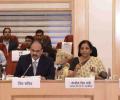
After the GST Council's meeting in March, the Centre had sought views from Attorney General K K Venugopal -- who is the chief legal officer of the government -- on the legality of market borrowing by the council to make good any shortfall in the compensation fund. The AG in his view said there is no obligation on the central government to pay the GST compensation shortfall, according to the sources.

For the government to meet its GST roll-out deadline of April 1, 2017, the states will have to ratify the Bill before Parliament's winter session, starting November.

The new restriction will be challenging for businesses, as they will have to do regular follow-ups with their suppliers.
Agra has long been known for the Taj Mahal, but it is also a manufacturing hub filled with micro, small and medium enterprises (MSMEs) that make everything from electronic components to metal products, from paints and chemicals to footwear. And five years after the introduction of the Goods and Services Tax (GST), the MSMEs here complain that while the indirect tax regime has been transformative, cutting out the need to file multiple taxes, its biggest drawback has been the delay in credit refunds. Whoever you speak to - MSME owners, tax lawyers, or industry bodies like the National Chambers of Industries and Commerce (NCIC), Agra Footwear Manufacturers and Exporters Chamber (AFMEC) and Agra Shoe Manufacturers Association (ASMA) - they all emphasise that the GST continues to face some key challenges.
If other states follow suit, it is going to become difficult for the GST Council to decide on the next stage of reforms.

The revenues for August are 88 per cent of the GST collected in the same month last year.
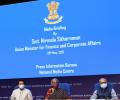
The GST Council on Friday left taxes on COVID-19 vaccines and medical supplies unchanged after the BJP- and Opposition-ruled states sparred over whether tax cut benefits will reach the common man. Congress and other Opposition ruled states have been demanding a reduction in taxes but the central government felt the move may not result in tangible gains for people. "It is one thing to rush to say - do this, it will benefit the common man. But when the technical, fitment and law committees go into the details, you realise that that could have collateral impact on many others," Finance Minister Nirmala Sitharaman said. "I am not talking about the revenue generation aspect, but how many other items will get included in it as a result of which how you are going to implement it," she added.
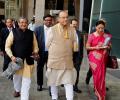
The government is going all out to spread awareness about the new indirect tax regime, and training lawmakers is being seen as a necessary first step.
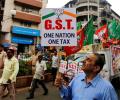
The 41st meeting of the GST Council, to be held via video conferencing, has just one agenda for discussion -- making up for shortfall in states' revenues, sources said.

Income tax officials on Monday conducted surveys at offices of engineering major Larsen & Toubro and media firm Zee Group for alleged GST evasion, an official of the tax department said. When contacted, L&T neither confirmed nor denied the development, while the media group has confirmed the tax survey. The tax official said surveys have been carried out at many L&T premises in the city, and in case of Zee, the surveys are underway at all its offices across the country since morning.
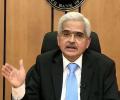
Reserve Bank Governor Shaktikanta Das on Tuesday said the fiscal-monetary coordination was at its best during the last six years even as he thanked Prime Minister Narendra Modi for giving the opportunity to head the monetary authority of the country. Das, in a series of posts on X, on his last day of his six-year term as RBI Governor, also thanked the Finance Minister, various stakeholders and his colleagues at the central bank.

Ask rediffGURU and PF expert Milind Vadjikar your insurance, stocks, mutual fund and personal finance-related questions.
The finance ministry has set up two committees of state finance ministers which would rework rate slabs, review GST exempt items and identify potential evasion sources. Four years after the roll out of the national Goods and Services Tax (GST), which replaced the complex indirect tax structure, the centre and states have started work on moving towards a "simpler rate structure in GST" by reviewing the current rate slabs, including special rates and merger of rate slabs. The Group of Ministers (GoM) on rate rationalisation would also review items under inverted duty structure to help minimise refund payout, and review the supply of goods and services exempt under GST with an objective to expand the tax base and eliminate breaking of input tax credit (ITC) chain.

Even if the GST rate is 18-20 per cent, there would be no average impact on inflation.

Sree Annapoorna Sree Gowri Shankar is a familiar name across the country. With over 1,500 employees, it is renowned for its filter coffee and Keerai Vada throughout Tamil Nadu. Its operating revenues range from Rs 100 crore to Rs 500 crore.

The Centre and states are looking to further tighten the GST registration process and legal measures to deal with the rising cases of fake invoicing. A meeting of the law committee of the GST Council has been convened on Wednesday to discuss these issues, finance ministry sources said. The committee, comprising senior central and state tax officers, would also discuss the GST fake invoice frauds, further tightening of the GST registration process and work out other legal measures including necessary law amendment required in the GST Act to curb the menace of fake invoicing, they added. Also the provisions related to deemed registration under Goods and Services Tax (GST) law may be tightened to prevent the misuse of such provisions by fake dealers and the provisions related to suspension of registration may also be streamlined to make the procedure of suspension and cancellation of registration more efficient and faster, so that such fraud operators can be prevented in time from continuing to pass on fake credit down the chain.

Certain clarifications by the GST Council, such as tax rates on ice cream parlours and royalty paid to state governments over mineral rights, may turn out to be contentious and lead to litigation, feel some experts. The council, at its meeting in Lucknow on Friday, had clarified that ice cream parlours will attract goods and services tax (GST). The clarification said these parlours sell already manufactured ice cream and such supply would draw 18 per cent tax.

The panel decided to omit the reverse charge mechanism (RCM) clause from the GST law under which registered taxpayers buying from unregistered taxpayers have to deposit the GST.

Fresh plans of privatisation or divestment in central public sector enterprises and public sector banks might take a back seat this financial year because these may require a large consensus among coalition partners.

It was better to first build a single-rate GST with a low rate, achieve full mastery of this, and then consider more complex possibilities such as high rates and multiple rates.

Here's everything you need to know about the Goods and Services Tax Bill.
The government has extended the deadline for filing GST annual return and audit report for the 2018-19 fiscal year by a month, till October 31.
GST taxpayers will be required to reverse by November 30 the input tax credit (ITC) claimed in the last fiscal in case their suppliers fail to deposit the due tax by September 30, the finance ministry has said. The taxpayers, however, can reclaim the ITC later following the deposit of taxes by the supplier. The ministry has inserted Rule 37A in Central Goods and Services Tax rules to give effect to the new provision.

'If weak indicators persist, there is a risk that India could slip into a prolonged slowdown similar to the one experienced between 2014 and 2019,' warns Debashis Basu.
There could be a strong incentive for tax payers to avoid the higher tax burden.

Pulse oximeters, hand sanitisers, temperature check equipment and ambulances too will attract lower 5 per cent tax.

A well-established tax system would have a predictable buoyancy - how fast the collections grow as a proportion to the growth of the economy. But that is not the case with GST. It is still undergoing substantial changes as the government responds to structural as well as administrative glitches.

Stating that GST council meetings have become "almost toxic" with the erosion of trust between the Centre and states, West Bengal minister Amit Mitra on Wednesday urged Union Finance Minister Nirmala Sitharaman to consider a "course correction" to rebuild faith. In a letter to Sitharaman, the state's finance minister also claimed that the central government comes to GST council meetings with a "predetermined conclusion". Mitra on June 13 alleged that his voice was "muzzled" during the GST Council meeting on that day and his opposition to levy taxes on Covid essentials like vaccines, masks, PPE kits and anti-viral drug Remdesivir, was not heard.
